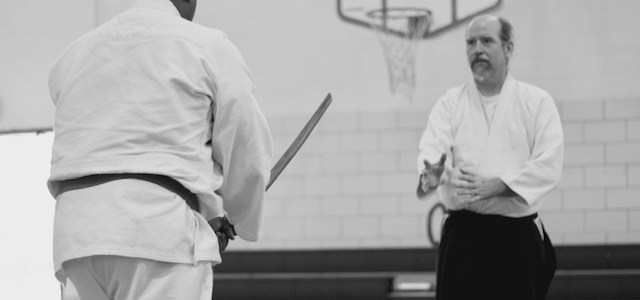
Danielle Smith began training under Stanley Pranin in 1973, eventually taking over Pranin’s Aikido of Monterey three years later. As she continued through her aikido journey, she had the opportunity to experience many different early instructors, like Frank Doran, Mary Heiny, Linda Holiday, and Motomichi Anno. She also trained in Hakko-ryu Jujutsu, Seibukan Jujutsu, and … Continue reading Interview With Aikido of Monterey Dojo-Cho Danielle Smith: Aikido in Northern California, Part I
Interview with Ravenwood Aikikai Chief Instructor David Hurst: Akira Tohei’s Legacy
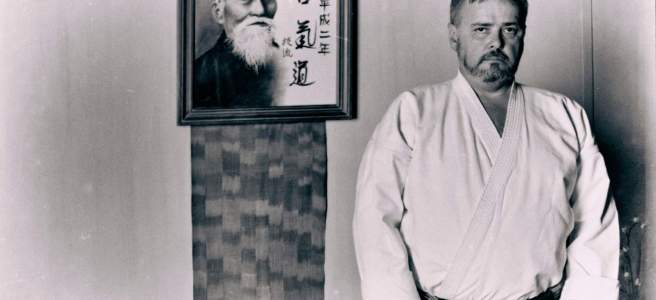
David Hurst began his aikido journey in January 1988 after watching a demonstration led by Akira Tohei. He was enamored by Tohei’s ability and quickly took to his teachings. In addition to Tohei, Hurst had the opportunity to train under Hawk Durham and Judy Leppert. Currently, he holds the rank of sandan and is the … Continue reading Interview with Ravenwood Aikikai Chief Instructor David Hurst: Akira Tohei’s Legacy
Interview with Longtime Aikidoka Andrew Wai: Feeling is Seeing
Andrew Wai is not your average aikidoka, for he cannot see. But this has not stopped him from recently achieving his shodan! He first began aikido while he enrolled in Princeton University and continued on from there. Without his sight, he focuses on the feel of the technique and his ukemi. Today, Wai took some … Continue reading Interview with Longtime Aikidoka Andrew Wai: Feeling is Seeing
Interview with Shindai Aikikai Chief Instructor Steve Fasen: Dennis Hooker and His Legacy, Part II
Steve Fasen found aikido almost by accident. After training in karate for a number of years before coming to the Orlando area, he wandered into an aikido class when his kids’ gymnastics class ran over. A few weeks later, Fasen met Dennis Hooker and proceeded to follow his teachings and later became friends with his … Continue reading Interview with Shindai Aikikai Chief Instructor Steve Fasen: Dennis Hooker and His Legacy, Part II
Interview with Shindai Aikikai Chief Instructor Steve Fasen: Dennis Hooker and His Legacy, Part I
Steve Fasen found aikido in Central Florida almost by accident. After training in karate for a decade prior to moving to the Orlando area, he wandered into an aikido class when his kids’ gymnastics class ran over. A few weeks later, Fasen met Dennis Hooker and proceeded to follow his teachings. Today, Fasen met up … Continue reading Interview with Shindai Aikikai Chief Instructor Steve Fasen: Dennis Hooker and His Legacy, Part I
Reflecting on Mind Over Muscle
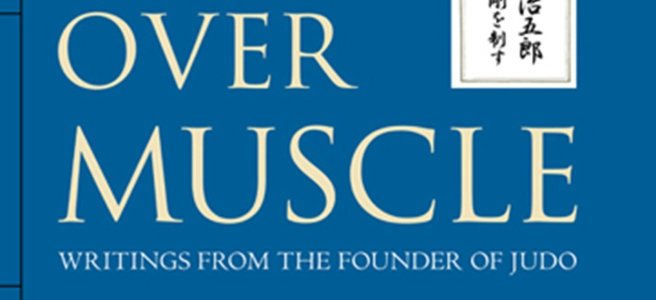
Kano, Jigoro. Mind Over Muscle: Writings from the Founder Judo. New York: Kodansha USA, 2013. While practicing judo during the early stages of the pandemic, I found myself feeling like I was missing something in my training. There was an extra layer that eluded me when I attempted to throw my partner in nage waza. … Continue reading Reflecting on Mind Over Muscle
Fencing and Kendo: A Layman’s Observation
Recently, I had the opportunity to watch a local fencing tournament. The participants were beginners of the sport who had just finished their ten-week introductory course. Being beginners, the fencers competed with the foil, where only the torso was the valid scoring area. Throughout the experience, being new to the sport, both the newly inducted … Continue reading Fencing and Kendo: A Layman’s Observation
Interview with Chester County Kokikai Founder Jason Martin: The Silent Pioneer and Kokikai Aikido
Growing up with a fascination for the martial arts, it was no wonder Jason Martin found himself in an aikido school under Philadelphia pioneer Shuji Maruyama. Since then, he has continued following the teachings of Maruyama, even opening his own school, Chester County Kokikai Dojo in 2010, spreading what he learned from the Silent Aikido … Continue reading Interview with Chester County Kokikai Founder Jason Martin: The Silent Pioneer and Kokikai Aikido
Kendo in Hawaii: Abridged
This history is based on the Hawaiian kenshi interviews published through this chronicle, while using a handful of outside sources to provide historical or social context. This history, unfortunately, is not a complete one, however, it is one step closer to achieving a clearer picture of how the art evolved and changed on the Hawaiian … Continue reading Kendo in Hawaii: Abridged
The Misrepresentation of Martial Arts by Michael Aloia
Traditionally, within the context of modern times, martial arts have served as a way for the everyday person to participate in what's considered an ethnically and culture-based – even stylized – form or system of self-empowerment. The benefits have always included a level of better fitness, health, and well-being to physically and mentally live fuller … Continue reading The Misrepresentation of Martial Arts by Michael Aloia